In-school AI workshop · 2 or 3 days
Degree nahi. Direction chahiye.

From AI users
to AI builders.

Class 8 se 12 tak.

Students use AI every day, and mostly trust it blindly. In two or three days inside your school, they learn to build with AI and to build AI: each team creates a working AI agent for a real problem. No coding needed.

Zero effort for the school. No syllabus disruption. Nothing goes home.

Prefer it on paper? Read the one-page program brief.

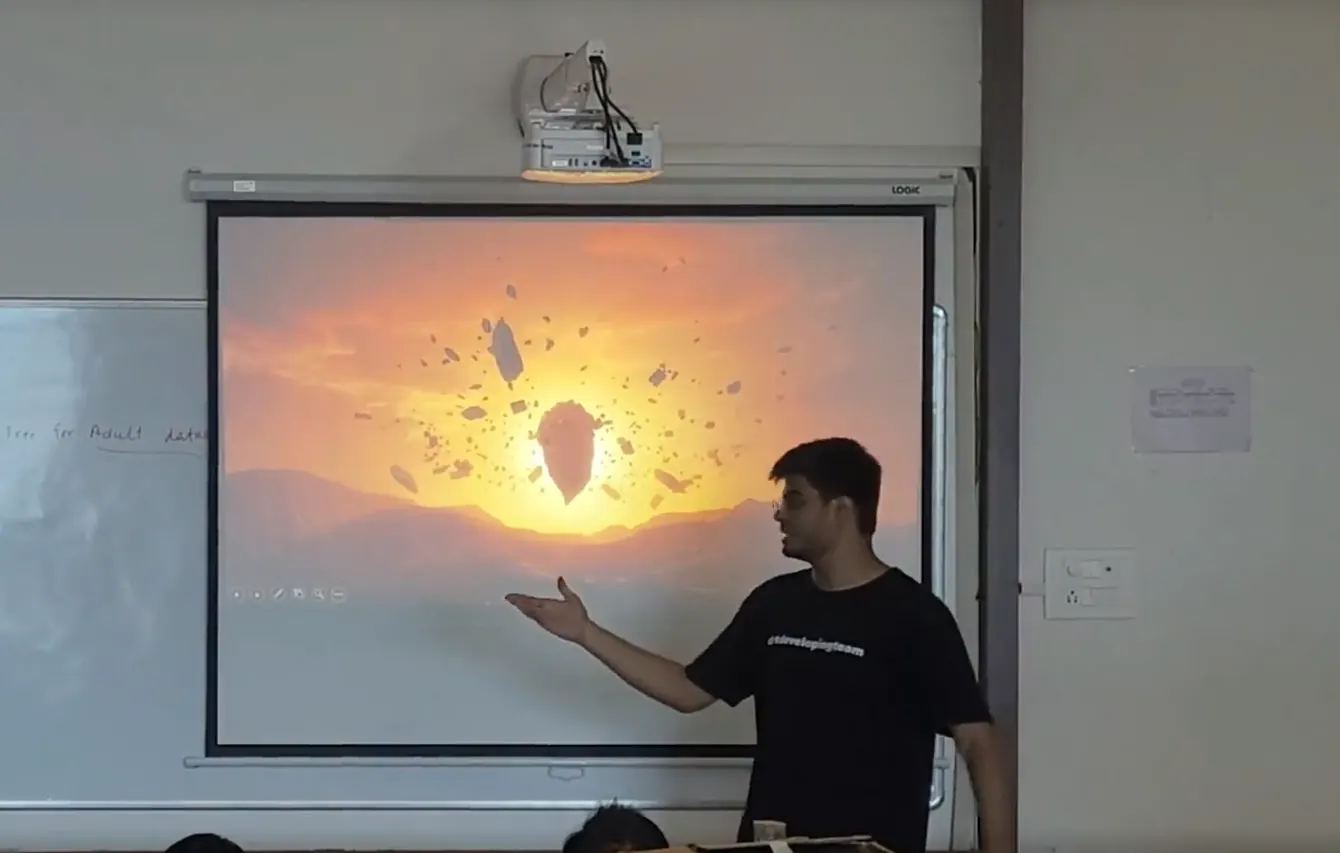
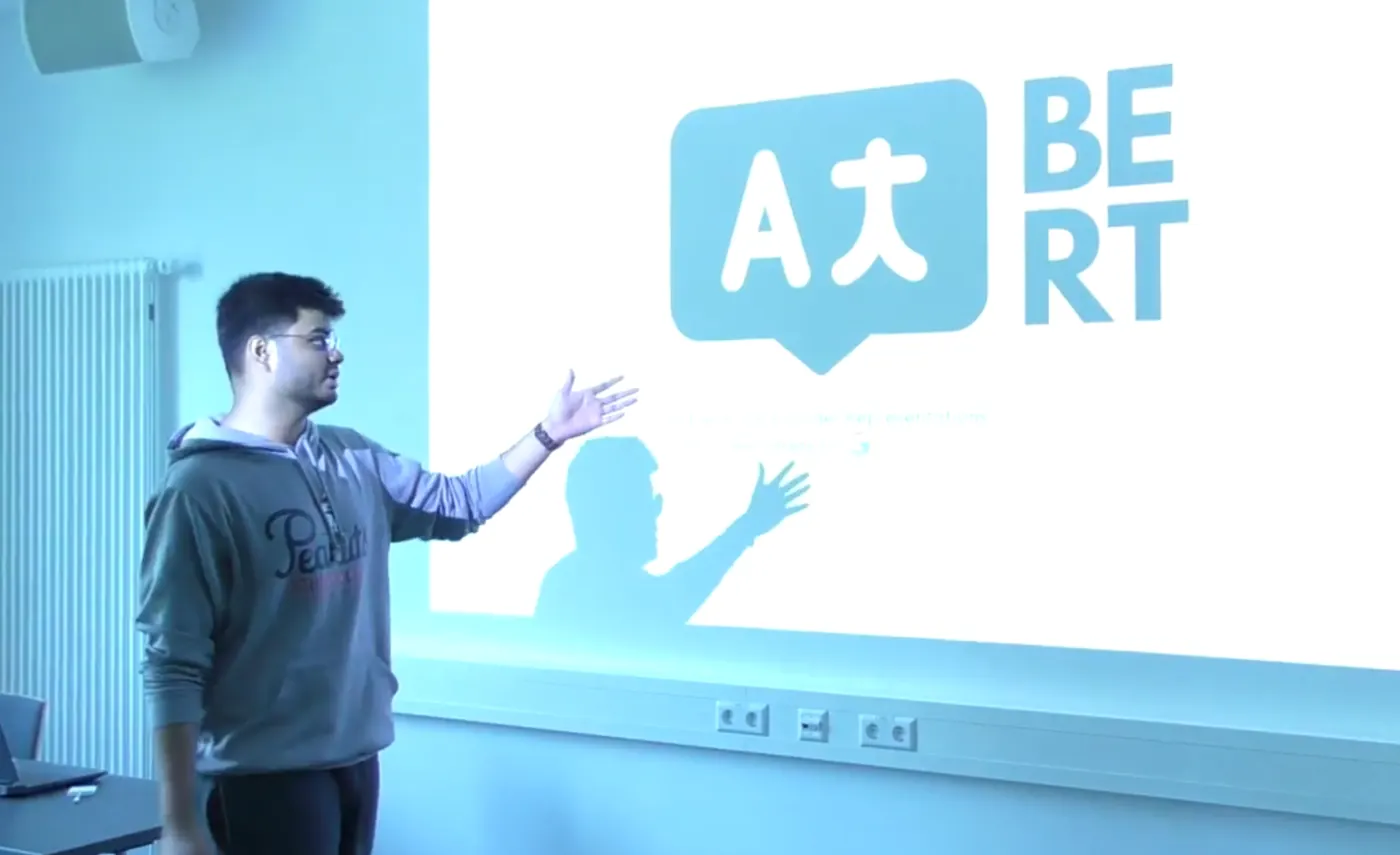
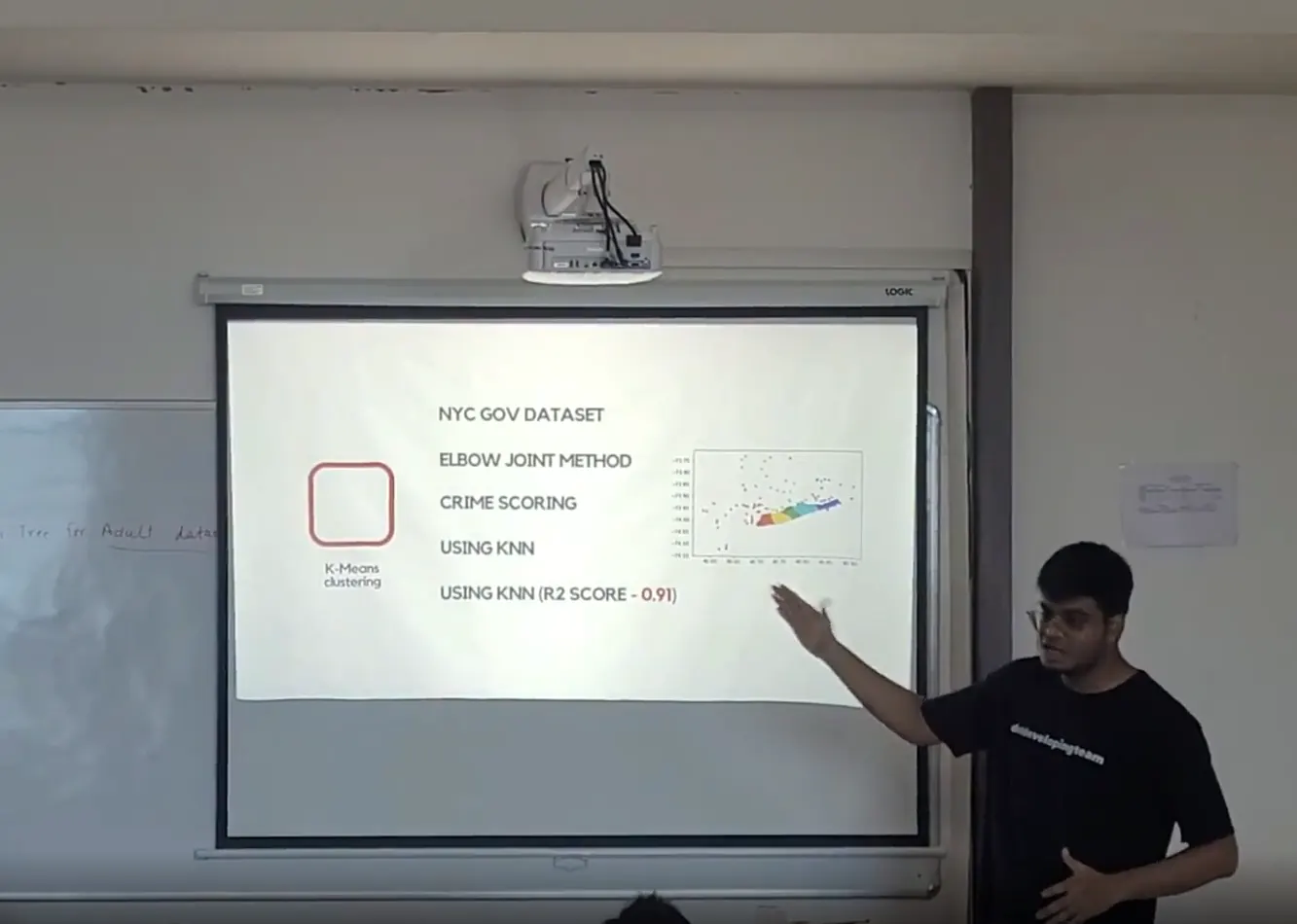
Amaan Shaikh, founder and program instructor of Dimaag aur Machine
Amaan Shaikh
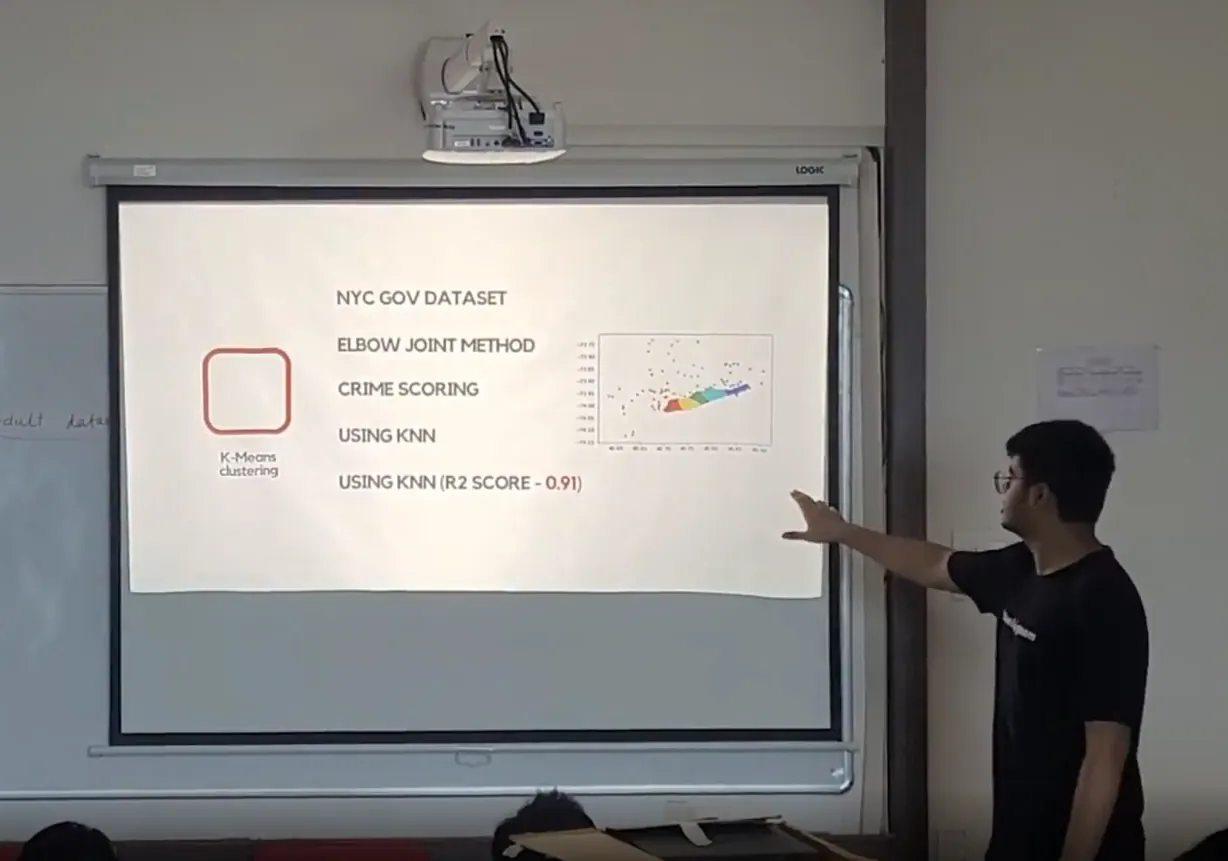
Builds AI systems for companies in Germany. Teaches the same craft inside Indian classrooms.
SDE in Germany M.Sc. CS, Konstanz 500+ students taught
  • CBSE. Runs alongside CBSE's new AI and Computational Thinking curriculum.
  • CISCE and ICSE. Complements the ICSE Robotics and AI subject in Classes 9 and 10.
  • IB. Fits IB's inquiry-led, project-based way of learning.
  • Maharashtra State Board. Taught in English and Hindi, for State Board classrooms.
  • Every session runs inside school hours, in your timetable.
  • A school teacher stays in the room for every class.
  • Every team builds an AI agent for a real problem.
  • Nothing goes home. No homework and no evening screen time.
  • No student accounts. No personal data goes into any AI tool.

Every board.
Every classroom.

The programs

One program for students & teachers.

Students build a working AI agent in teams. Teachers learn to turn their own chapters into AI-made teaching material. Both run inside school hours, under the same safety rules.

For students · Classes 8–12

Soch aur System™

Machine jawab de sakti hai. Sochna tumhe hai.

Format
Your computer lab and AV room, inside school hours. Students work in teams.
Duration
2 days × 4 hours, or
3 days × 4 hours with a judged pitch. The school chooses.
What every team builds

A working AI agent for a real problem at your school, built from real AI models and tools and deployed by the team. Like North, the voice agent on this page, but each team designs its own.

What they learn
  • ✓Build with AI: use AI models and tools as building blocks for a real job
  • ✓Build AI: understand how it works underneath, and make their own agent
  • ✓Manage AI agents through a full workflow, start to finish
  • ✓Where AI goes wrong, and where use turns into misuse
  • ✓How AI is changing every profession, not only engineering
Two workshops: one for Classes 8–10, and a separate, more advanced one for Classes 11–12, which can run together. No coding in either.
See how the 2 or 3 days run
For teachers · Subject edition

Chalk aur Calibration™

Teacher wahi. Toolkit nayi.

Format
In-school training, department by department, 2–6 hours per subject
Subjects
Maths, Physics, Chemistry, Biology, Languages & Humanities
What teachers learn
  • ✓Turn an existing chapter into quizzes, worksheets and revision sheets
  • ✓Check AI output for errors before it reaches a student
  • ✓Cut preparation time without cutting quality
  • ✓Keep material that can be reused year after year
For teachers: no tech background needed, no evaluation, no extra duties. Quoted separately to the school, per department.
Ask about Chalk aur Calibration
Why now

Students are becoming AI consumers.

They ask, copy, and trust the answer. Meanwhile the professions they are preparing for are changing faster than any syllabus. The World Economic Forum expects 170 million new jobs and 92 million displaced by 2030, with AI and big data the fastest-growing skills. The new jobs go to people who can build with AI, not just use it.

AI is now a life skill

Like reading a balance sheet or speaking in public, it now matters in medicine, law, design and business, not only in software.

Professions move faster than education

Students in Classes 8 to 12 choose subjects and colleges for careers that will look different by the time they graduate.

Blind trust is the real risk

Schools teach the ill effects of the internet. Very few teach where AI goes wrong, or where using it turns into misusing it.

What we teach
From consumers to producers.
Build with AI

Use AI models and tools as building blocks, and manage AI agents through a whole workflow until the job is done.

Build AI

Understand how AI works underneath, then design and direct an agent of their own from existing AI models. No coding and no model training.

The format

Two or three days. The school chooses.

Four hours a day, inside school hours. Not a lecture: every day runs in cycles of about 30 minutes of concept, in the AV room through games, stories and live demos, then 30 minutes of building in the computer lab. Teams work on one product from the first hour to the last, in front of the instructor and their teacher, and fix what breaks along the way.

2-day workshop · 8 hours
Learn, build, finish.

Concepts and building, one cycle at a time. By the end of day two, every team has a working AI product with a shareable link, shown in a demo round. Certificates for every student.

3-day workshop · 12 hours · Recommended
Everything in two days, then pitch.

Advanced modules applied to their product, then a 5-minute pitch per team, judged by a school nominee and the instructor, with awards for the Winner, the Runner-up and the Best Innovator. Pitches run in the AV room, with parents invited or as a larger school event.

Best on consecutive days: Thursday to Saturday for three days, Friday and Saturday for two, so students stay with their build. Saturday to Saturday is possible, but needs more revision time.

Where school AI education is heading

CBSE introduced Computational Thinking and AI for Classes 3–8 from the 2026–27 session, and CISCE offers Robotics and Artificial Intelligence as an ICSE subject in Classes 9–10. Schools that give students hands-on building experience now will be ahead of that shift, not catching up to it.

Not Computer Applications, not robotics

Computer Applications teaches programming for the board exam, and robotics teaches hardware. This is about AI itself, for every student, whatever they want to become. It complements both, and students who enjoy them often gain the most: AI is the layer that now sits on top of both.

Outcomes

What students and the school walk away with

Not a folder of notes. Everything on the left was built or tested in the room. Everything on the right is for the school.

01
A working AI agent

Built by their team for a real problem, from the first hour to the last. They can open it and walk you through it.

02
How AI works underneath

Why a model answers the way it does, and why it can be fluent and wrong. Enough to judge it, not just use it.

03
Judgement about AI

Where AI is wrong, where using it becomes misusing it, and when to stop trusting a fluent answer.

04
Certificates and prizes

A certificate for every student, co-signed by the school. On the 3-day format, prizes for the winner, the runner-up and the Best Innovator.

What your school receives
  • ✓A visible AI initiative. Photos and a highlight video of your students building AI, ready for your social media and the next admission season. Only with written parental consent.
  • ✓A pitch event, if you want one. Teams pitch to students, to parents, or at a full school event. Your choice.
  • ✓Ready-made parent communication. Video, flyer and printed copies, designed by us and approved by you before anything goes out.
  • ✓Student-built AI products. Working tools built by students for your school, live for 30 days after the workshop.
  • ✓An outcome report. Attendance, before-and-after quiz results, team projects and pitch results.
  • ✓Minimal admin. We handle the teaching, materials and every question about the program. Fees run through your usual fee channel.
How it works

How it runs in your school

Every step from the first call to the final day.

The school provides the computer lab and AV room, the time slot, one or two teachers, and its channels to parents. We handle the teaching, materials, parent communication and program questions.
  1. 1 A 30-minute call with Amaan. Your questions, the format and possible dates. A written proposal follows.
  2. 2 The school picks 2 or 3 days and the dates. Consecutive days work best. Four hours a day, inside school hours.
  3. 3 We send the parent material, you approve it. Video, flyer and printed copies for your channels. Enrolment is voluntary.
  4. 4 Parents enrol through the school. Fees are collected through your usual fee channel. Questions about the program come to us.
  5. 5 The workshop runs in your lab and AV room. Teams build one AI agent each. A school teacher is in the room throughout.
  6. 6 Final day: certificates, and a pitch on 3 days. Judged pitches with prizes. Parents can attend if the school allows.
  7. 7 The program ends. Photos, video and a short report for the school. No subscription, no follow-up sales.

I don't just teach AI. I build it for a living.

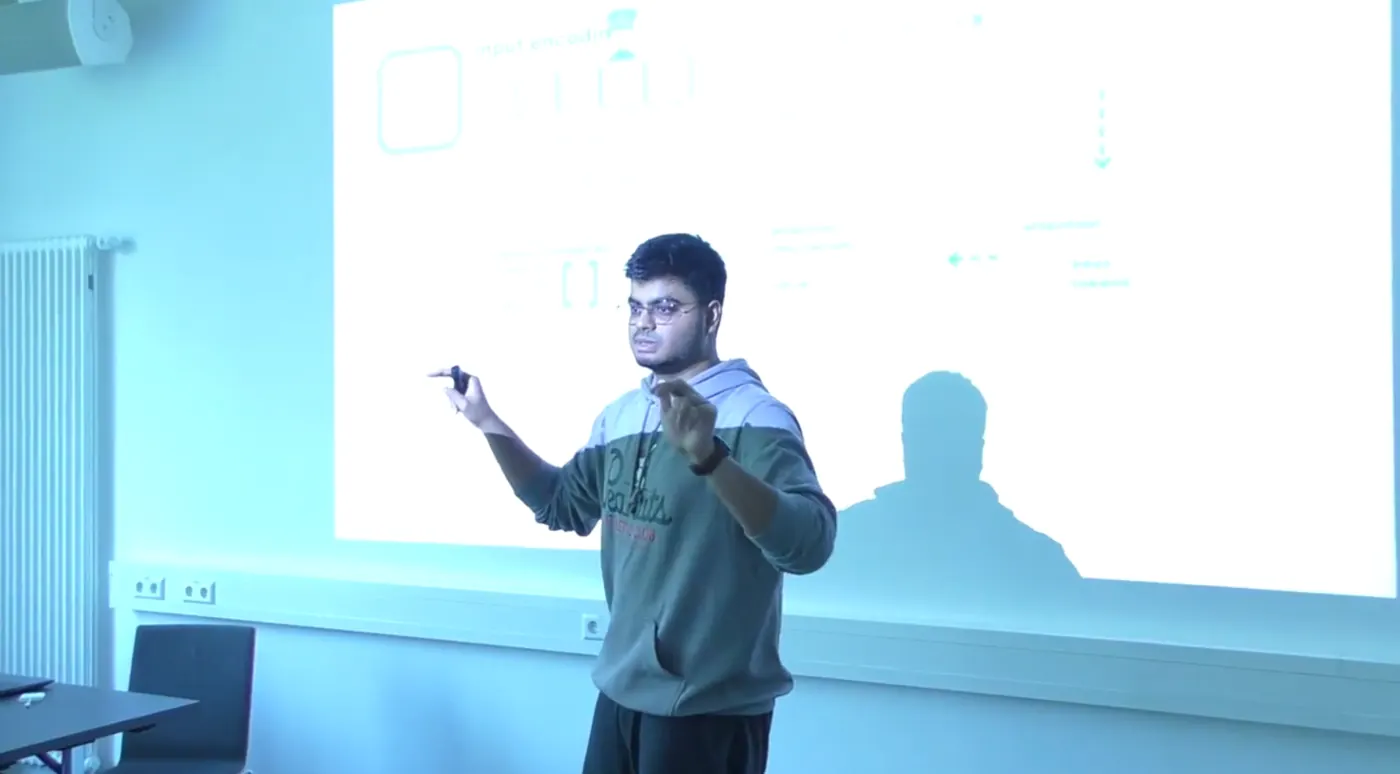
I'm a Software Development Engineer building AI systems for companies in Germany. I design every session of this program and teach the in-school workshops myself, in English and Hindi, in a regular school computer lab. There is no franchise and no outsourced trainer pool.

M.Sc. Computer Science
University of Konstanz, Germany
B.Tech Computer Science
MIT ADT University, Pune
500+ students taught
University of Konstanz and MIT ADT University
“Students don't need motivation. They need clarity — at the right age.”

I build models for a living. Online, I teach students to build their own.

I'm a data scientist building machine learning systems for product teams: the pipelines, language models and analytics behind real apps. For this program I lead the online cohorts. Students join me live over video while their own teacher stays in the room, and every team works through exactly what the in-school batches do: one real problem, one working AI agent, built step by step.

Data science
ML pipelines, NLP, analytics
Live online cohorts
Same build as the in-school batches
4+ years experience
Industry AI systems
“The screen changes the room, not the standards.”
Amaan Shaikh, in-school instructor Kevin Patel, online instructor
Offline
Runs sessions inside your school
Amaan Shaikh
Builds AI in Germany. Teaches it in Indian classrooms.
For parents

What parents will ask you. Answered.

Once the circular goes out, these are the questions that reach your office. Each has an answer below, and anything parents ask later comes to us directly.

  • “Sab AI use kar rahe hain. Mera bachcha bas user hi rahega?”
  • “YouTube pe sab free hai. Isme naya kya hai?”
  • “Coding nahi aati. Phir AI kaise banayega?”
  • “Certificate milega, ya kuch actually banega?”
  • “Board exams ka time waste toh nahi hoga?”
  • “Doctor banna hai, engineer nahi. Tab bhi kaam aayega?”
“Mera bachcha bas user hi rahega?”
They build. They don't just prompt.

Typing into ChatGPT is where most students stop. Here each team builds a working AI agent, then tests where it breaks and fixes it.

“YouTube pe sab free hai. Isme naya kya hai?”
Videos teach a tool. This teaches a system.

Videos have no structure and no one checking. Here every concept is applied the same hour, with an instructor and a teacher in the room.

“Coding nahi aati. Phir AI kaise banayega?”
No coding needed.

Students build on our own platform, step by step. Any stream, Classes 8 to 12. A fresh mind matters more than prior knowledge.

“Certificate milega, ya kuch actually banega?”
Both.

A working AI agent their team built, and a certificate co-signed by the school. On 3 days, a judged pitch with prizes.

“Board exams ka time waste toh nahi hoga?”
Two or three days, then it's done.

Inside school hours, with no homework and nothing to install at home. And they learn to use AI to study properly, not to skip studying.

“Doctor banna hai, engineer nahi. Tab bhi kaam aayega?”
Especially then.

AI is changing medicine, law, design and business as fast as engineering. This is a life skill for every profession, not a coding course.

Access is not the gap. Ability is.

Every student can already open ChatGPT. Very few can build with it, or tell when it is wrong. That gap closes inside the school, with the teacher in the room. Safe hai, control mein hai.

Compared

How this compares

Each of these is useful for something else. Most AI workshops teach students to consume AI. Coding and robotics classes teach code and hardware. This teaches students to produce with AI.

Many students also attend tuition, coding or robotics classes. This does not replace any of them.

Who does what

Simple for the school.

Your school provides
  • ✓Access to the computer lab and the AV room. Sessions move between both, and the AV room hosts the final pitch
  • ✓Two or three days, 4 hours each, inside school hours
  • ✓One or two teachers in the room for every session
  • ✓Your channels to parents, to share the material we design, and fee collection through your usual channel
  • ✓Distribution of our printed flyers, once your office has approved them
Dimaag aur Machine provides
  • ✓The program and all teaching
  • ✓Access to our build platform. Students never sign up or enter personal details
  • ✓Headphones for every team, if the lab does not have them
  • ✓Marketing material: video, flyers and printed copies
  • ✓Answers to every parent question about the program
  • ✓Certificates, prizes, the pitch event, photos and a highlight video
About fees
Zero effort for the school with Soch aur System.
  • A one-time, all-inclusive fee per student, paid by parents through the school. Enrolment is voluntary.
  • In the range of a school robotics or activity workshop. The exact fee is set in your school’s written proposal, by format and batch size.
  • Batches of 30 to 70 students, to keep quality high. Larger enrolments are split into two batches at the same fee.
  • No subscription, nothing sold afterwards, no follow-up program to decline.
FAQ

Questions principals ask

Which classes is it for? +

Classes 8 to 12, any stream. Classes 8–10 take one workshop. Classes 11–12 take a separate, more advanced workshop, and the two years can run together. No coding is needed in either.

Two days or three? +

The school chooses. Both run 4 hours a day inside school hours. The 2-day workshop ends with a finished AI agent per team. The 3-day workshop adds advanced modules and a judged 5-minute pitch per team, with prizes. Consecutive days work best: Thursday to Saturday, or Friday and Saturday.

How is this different from Computer Applications or robotics? +

Computer Applications teaches programming for the board exam, and robotics teaches hardware. This teaches AI itself, as a life skill: how it works, how to build with it, and where not to trust it. It sits alongside both and replaces neither.

What do we need to provide? +

Access to your computer lab and AV room, one or two teachers in the room, and 4 hours a day for 2 or 3 days. We bring headphones for every team if the lab does not have them, and everything students build on.

Is it safe? Whose accounts do students use? +

Students never sign up for anything or enter names, phone numbers or emails. All tools run in a workspace the instructor manages, and the AI services used are named to the school in advance. A student’s own voice is used only with written parental consent, and voice samples and conversation logs are deleted when the product goes offline. Misuse of AI, and where it begins, is part of what they learn. A school teacher is in the room throughout, and students are photographed only with written parental consent.

What does it cost, and who pays? +

Parents pay a one-time, all-inclusive fee per student through the school’s own fee system, in the range of a school robotics or activity workshop. Cancelling is free up to 7 days before the workshop. The exact fee and full terms are in your school’s written proposal. The student program costs the school nothing. The teacher program, Chalk aur Calibration, is quoted to the school separately.

Who teaches the sessions? +

Amaan Shaikh designs every session and teaches the in-school workshops himself. He is a Software Development Engineer building AI systems in Germany, with an M.Sc. in Computer Science from the University of Konstanz, and has taught 500+ students at Konstanz and MIT ADT University.

Press the circle. Ask anything.

North is an AI agent we built to answer questions about this program, live on this page. Speak in Hindi or English. In the workshop, every team builds an agent like it, each for a real problem of its own.

North uses your microphone only while a conversation is running. Your voice is processed by ElevenLabs to reply and is not stored by us. Privacy policy

Start with a 30-minute call.
Decide if it fits your school.

You speak with Amaan directly. Bring your timetable and a rough idea of your computer lab and AV room, and you’ll leave the call with a suggested format and dates.

Afterwards you receive a written proposal for your school: format, dates, fees and terms.
Nashik schools get priority scheduling.
Dates for the 2026–27 academic year are open.

Have a quick question first? , the voice assistant on this page.

Book a 30-minute call

Pick a time that works for you. The call is with Amaan, who teaches the program.

Not ready to book? Read the program brief, a single page you can print or forward to your management committee.

Bookings are handled by Cal.com. See our privacy policy.